
In a static shelving or selective rack layout, the operator walks lane after lane to locate each SKU, then reaches into the rack to retrieve it. Travel and search often consume more than half of a picker's shift.
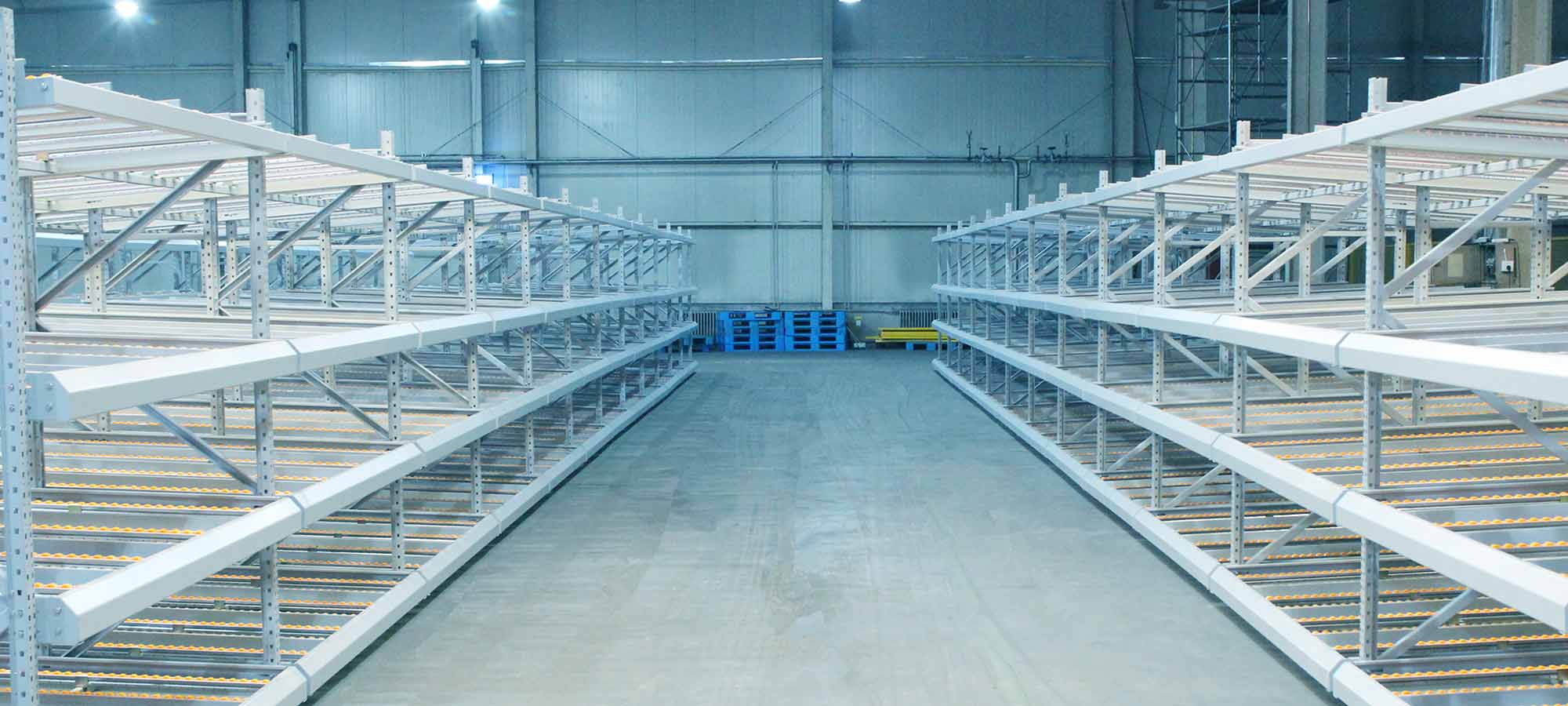
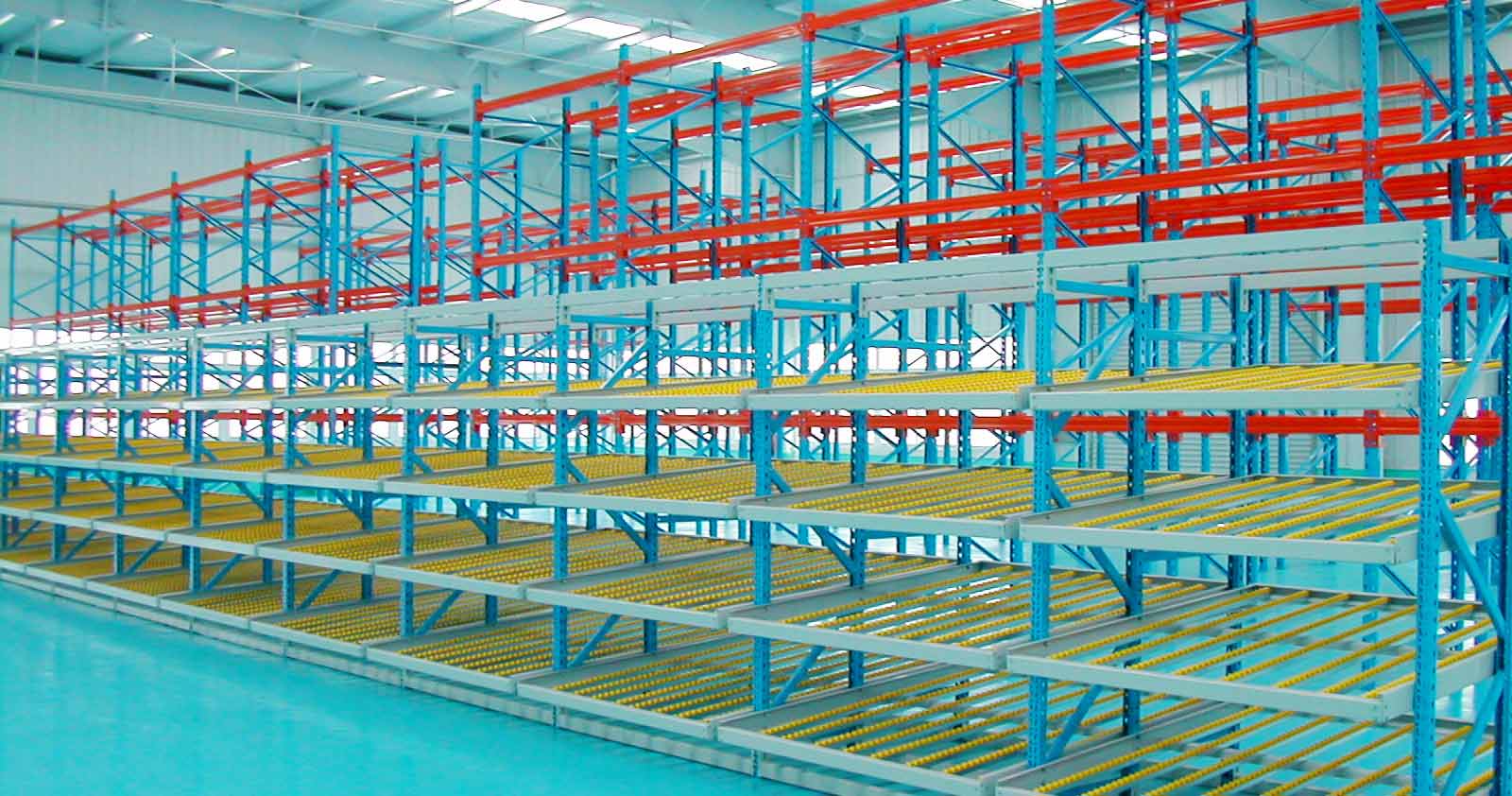
A flow rack reverses this direction. Cartons or totes are loaded on the high end of an inclined lane and glide forward on roller or skate-wheel tracks to the pick face; when the front item is removed, the next one automatically advances. The picker stays in a compact zone and the product comes to hand. This is the first and biggest transformation: from a walking-axis operation to a goods-to-face flow operation, which typically raises picks per hour and cuts non-value walking.
Without flow racks, First-In, First-Out (FIFO) depends on workers remembering to pull the oldest stock first. New cartons are stacked on top, and old inventory is forgotten at the back until it expires.
On a flow lane, FIFO is built into the physics: stock loaded at the back always reaches the front first. The oldest carton is ready to pick before the newest one, automatically. This transformation matters most for food, beverage, pharmaceuticals, cosmetics, and any date-coded or batch-tracked goods, because it reduces spoilage, obsolescence, and write-offs without relying on memory or discipline.
Traditional layouts force forklifts, replenishment staff, and order pickers into the same aisle, causing congestion, waiting, and safety risk.
A flow rack separates the two tasks onto opposite sides: replenishment happens from the rear aisle, picking from the front aisle. Staff restock without interrupting active picking, and forklift traffic no longer crosses the pick path. The warehouse transforms from a single crowded traffic lane into two dedicated, non-blocking workflows.
The change is strongest where at least one condition holds:
Flow racks are less economical for very slow movers, irregularly shaped items, or extremely heavy single pieces — those usually stay on static or pallet storage. Many warehouses use a hybrid: flow racks for fast movers near the pick area, static storage for slow and bulky stock.
To get the transformation right, prepare: carton/tote dimensions and max weight, number of cartons per lane depth, daily pick volume and SKU count, required FIFO/expiry rules, available height and depth, WMS integration (for pick-to-light), and environment (dry, cold, or humid) for the right finish.
Q: Can a flow rack really speed up picking?
A: Yes, mainly by removing travel and search: goods advance to the pick face instead of the operator walking to them. The exact gain depends on your SKU profile and current layout.
Q: Does a flow rack force FIFO automatically?
A: Yes. New stock loads at the back and slides forward, so the oldest carton always reaches the pick face first, with no manual rotation required.
Q: Do flow racks need electricity?
A: The rack itself runs on gravity and needs no motor. Only the optional pick-to-light labels and WMS connection require power and software integration.
Q: Is flow racking good for every product?
A: It suits fast-moving, regular cartons and totes. Slow, irregular, or very heavy items are usually better kept on static or pallet storage; a hybrid layout is common.
We design and manufacture gravity flow racks, roller and skate-wheel lanes, and optional pick-to-light label systems for e-commerce, retail, grocery, and kitting operations. Send us your carton size, weight, daily pick volume, and floor layout, and we will return a proposed layout and quotation.
leave a message
Scan to Wechat :

Scan to WhatsApp :

Home
products
contact