Warehouse space costs keep climbing. Labor shortages keep worsening. And order volumes keep growing faster than the teams trying to fulfill them. Somewhere between the rising pressure and the shrinking margin, a quiet shift has taken hold in distribution centers around the world. In 2026, that shift has a name: the 4D shuttle racking system. Once considered a niche alternative to automated storage and retrieval systems (AS/RS), 4D shuttle racking is now the top choice for warehouses that want high-density storage without the heavy price tag and rigid footprint of traditional automation. This guide explains what a 4D shuttle racking system is, how it works, how it compares with traditional AS/RS, and what to check before you buy.
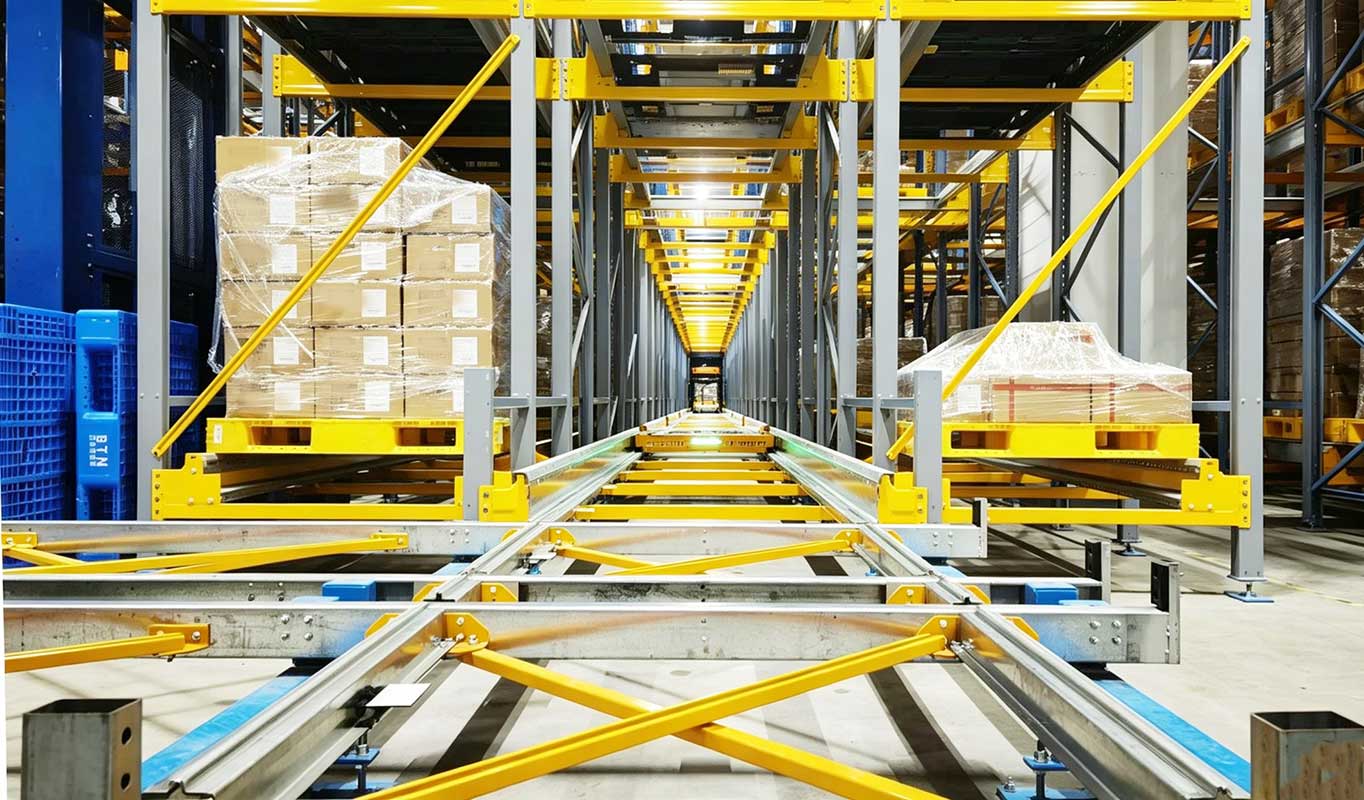
A 4D shuttle racking system is a high-density, semi- or fully automated storage solution in which battery-powered shuttle carts travel inside deep racking lanes to store and retrieve pallets — forward, backward, left, and right. The key difference from conventional racking is simple: the forklift never enters the storage lane. Instead, a shuttle cart carries the pallet into the rack, positions it at the correct depth, and returns to the lane entrance. The result is much higher storage density with far fewer aisles, because lanes can be as deep as your layout allows — not as deep as a forklift can reach.
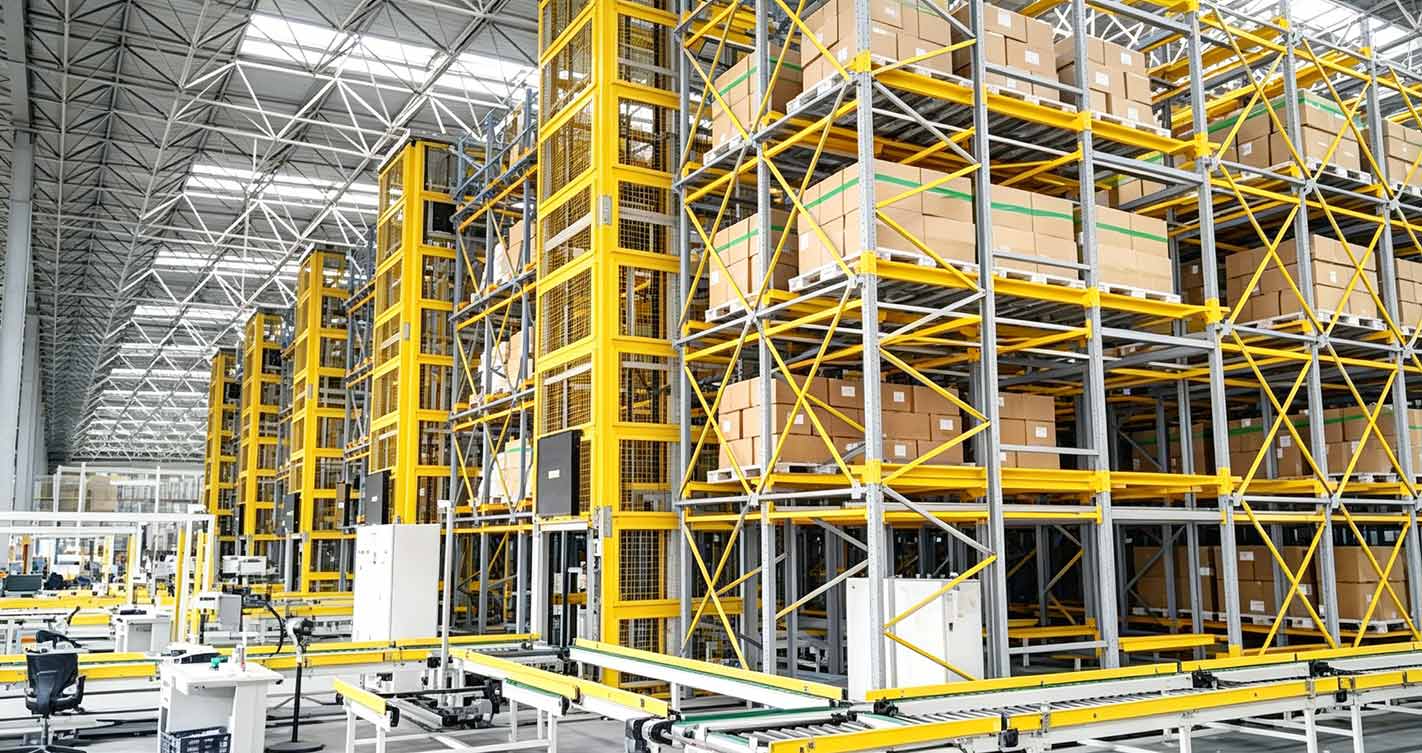
A typical 4D shuttle racking system consists of:
4D shuttle carts — battery-powered carriers that move pallets in all four directions inside the racking grid;
High-density racking structure — deep-lane racks designed for the shuttle's rails and guidance system;
Transfer cars or lifts — devices that move shuttles between lanes and levels;
WMS/WCS software — the brain that assigns tasks, tracks inventory, and schedules shuttle movements;
An interface station — where forklifts or conveyors load and unload pallets.
How a 4D Shuttle Racking System Works
The workflow is simple and repeatable:
1.A forklift or conveyor places a pallet at the lane entrance station.
2.The WMS assigns the pallet a storage position and sends the task to the WCS.
3.A shuttle cart enters the lane, travels to the assigned depth, and deposits the pallet.
4.For retrieval, the shuttle picks the pallet and brings it back to the entrance, where a forklift or conveyor takes over.
5.Transfer cars move shuttles between lanes and levels, so a small fleet of shuttles can serve an entire racking block.
6.Inventory is updated in real time — every movement is logged, giving you full traceability.
Top Benefits of 4D Shuttle Racking
1. Up to 80% higher storage density. By eliminating aisles and storing pallets deep in lanes, 4D shuttle racking systems dramatically increase the number of pallet positions per square meter compared with selective racking.
2. Lower total cost than traditional automation. No expensive stacker cranes, lighter racking structures, and simpler civil works mean a lower investment per pallet position — with a typical payback of 18–24 months for high-volume operations.
3. Real flexibility. A 4D shuttle racking system is modular. You can start with one block and expand lane by lane as your business grows, without redesigning the warehouse.
4. No single point of failure. Because a fleet of shuttles shares the workload, the system keeps running even if one shuttle needs maintenance — a major advantage over aisle-based automation.
5. Safer operations. Forklifts stay at the lane entrance. Operators never drive into narrow lanes, which reduces collisions, product damage, and rack damage.
6. Full visibility. Integrated with your WMS/WCS, the system provides real-time inventory accuracy, FIFO/FEFO discipline, and detailed performance reporting.
Typical Applications
4D shuttle racking systems are most valuable when you store palletized goods in high volume with a manageable number of SKUs:
Food & beverage — high volume, few SKUs, strict FIFO requirements;
Cold storage & multi-temperature warehouses — density saves the most expensive floor space in the building;
Manufacturing — raw materials and finished goods buffering;
Paper, packaging, and chemicals — heavy palletized loads;
E-commerce distribution — dense bulk storage feeding downstream picking zones.
FAQ
1. What is the difference between a 4D shuttle racking system and AS/RS?
AS/RS traditionally uses stacker cranes that travel within fixed aisles. A 4D shuttle racking system uses battery-powered shuttle carts that move inside racking lanes in all four directions. 4D shuttle racking systems are generally cheaper, more flexible, and easier to expand.
2. How much space can a 4D shuttle racking system save?
Compared with selective pallet racking, 4D shuttle racking systems can increase storage density by up to 80% in the same footprint, because the system eliminates most forklift aisles and stores pallets deep in lanes.
3. Is a 4D shuttle racking system suitable for cold storage?
Yes. Cold storage is one of the most popular applications, because the density saves the most expensive space in the building and automation reduces the time operators spend in freezing conditions.
4. What is the typical payback period?
For high-volume operations, industry experience points to a typical payback of 18–24 months, though the exact figure depends on labor costs, space costs, and throughput in your facility.
5. Can it be installed in an existing warehouse?
Yes. One of the main advantages of 4D shuttle racking over traditional AS/RS is that they work with existing buildings and floor layouts — a major reason they are replacing older automation in retrofits.
Conclusion: Make the Shift in 2026
Warehouses that adopted 4D shuttle racking technology early are already reaping the benefits: more pallet positions, lower costs, safer operations, and a system that scales with their business. If you are planning a new facility — or upgrading an existing one — a 4D shuttle racking system deserves to be at the top of your shortlist.