Modern warehouse and logistics operations are facing unprecedented challenges: rising labor costs, limited floor space, human picking errors, and inefficient manual inventory management. For manufacturing plants, e-commerce fulfillment centers, cold chain warehouses, and automotive parts storage facilities, traditional shelf storage and manual handling can no longer support high-volume, high-precision, and 24/7 operational demands. An
Automated Storage and Retrieval System (AS/RS) solves these pain points perfectly by integrating mechanical automation and intelligent software, becoming the core solution for modern warehouse digital transformation.
This article comprehensively explains the definition, working principle, core components, main types, and practical benefits of the AS/RS system, helping warehouse managers and project purchasers quickly understand whether automated storage and retrieval systems are suitable for their business scenarios.
1. What is an Automated Storage and Retrieval System (AS/RS)?
An Automated Storage and Retrieval System (AS/RS) is a computer-controlled intelligent warehouse automation solution designed for automatic inbound storage, outbound retrieval, inventory counting, and goods handling. Different from traditional manual warehouses, the entire operation process of AS/RS requires minimal human intervention, realizing full-process automation of goods management from storage location allocation to order delivery.
AS/RS systems are widely applied in scenarios with high storage density requirements, frequent inbound and outbound operations, and strict inventory accuracy standards. It can handle various cargo units including pallets, material boxes, cartons, and small parts, covering almost all medium and large-scale industrial and commercial storage scenarios.
2. Core Components of AS/RS System
A complete automated storage and retrieval system is composed of hardware mechanical equipment and intelligent management software, with coordinated operation of each module to ensure stable and efficient system operation. The core components are as follows:
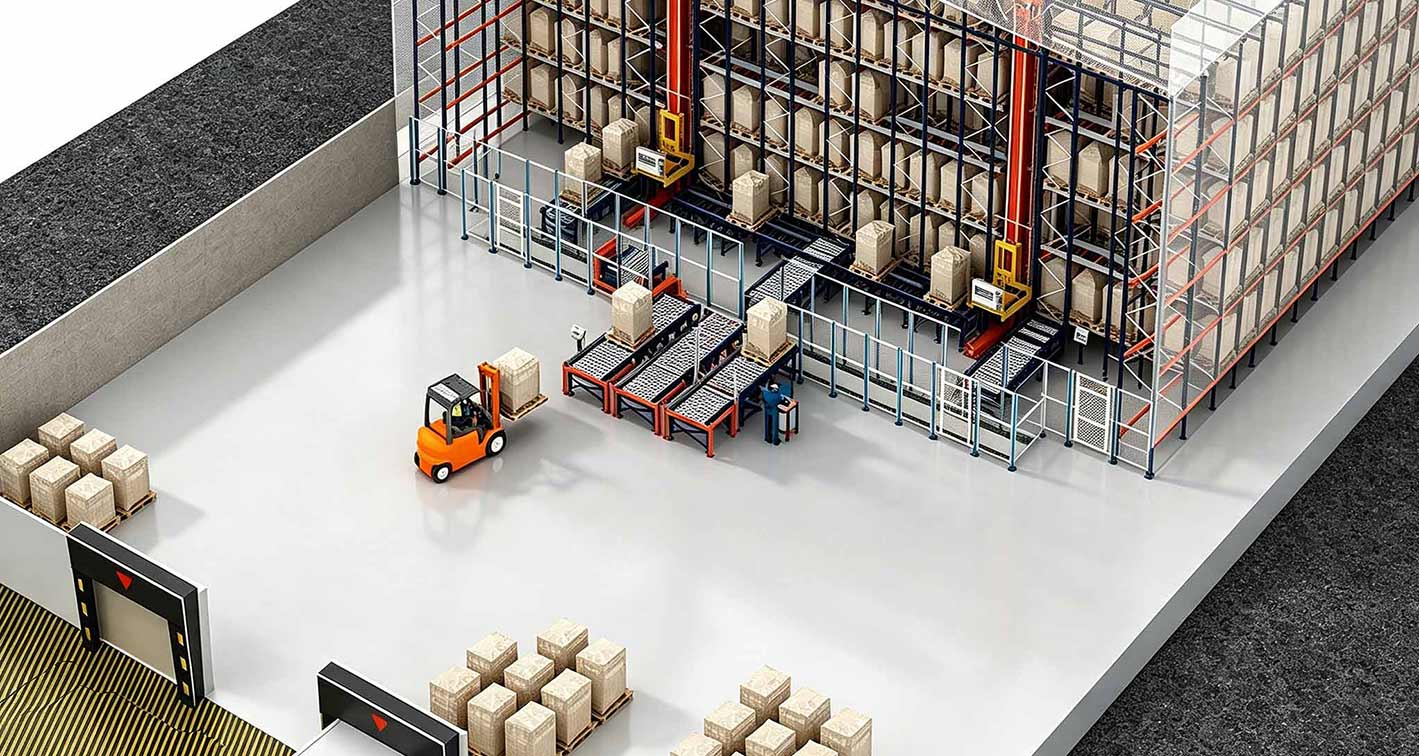
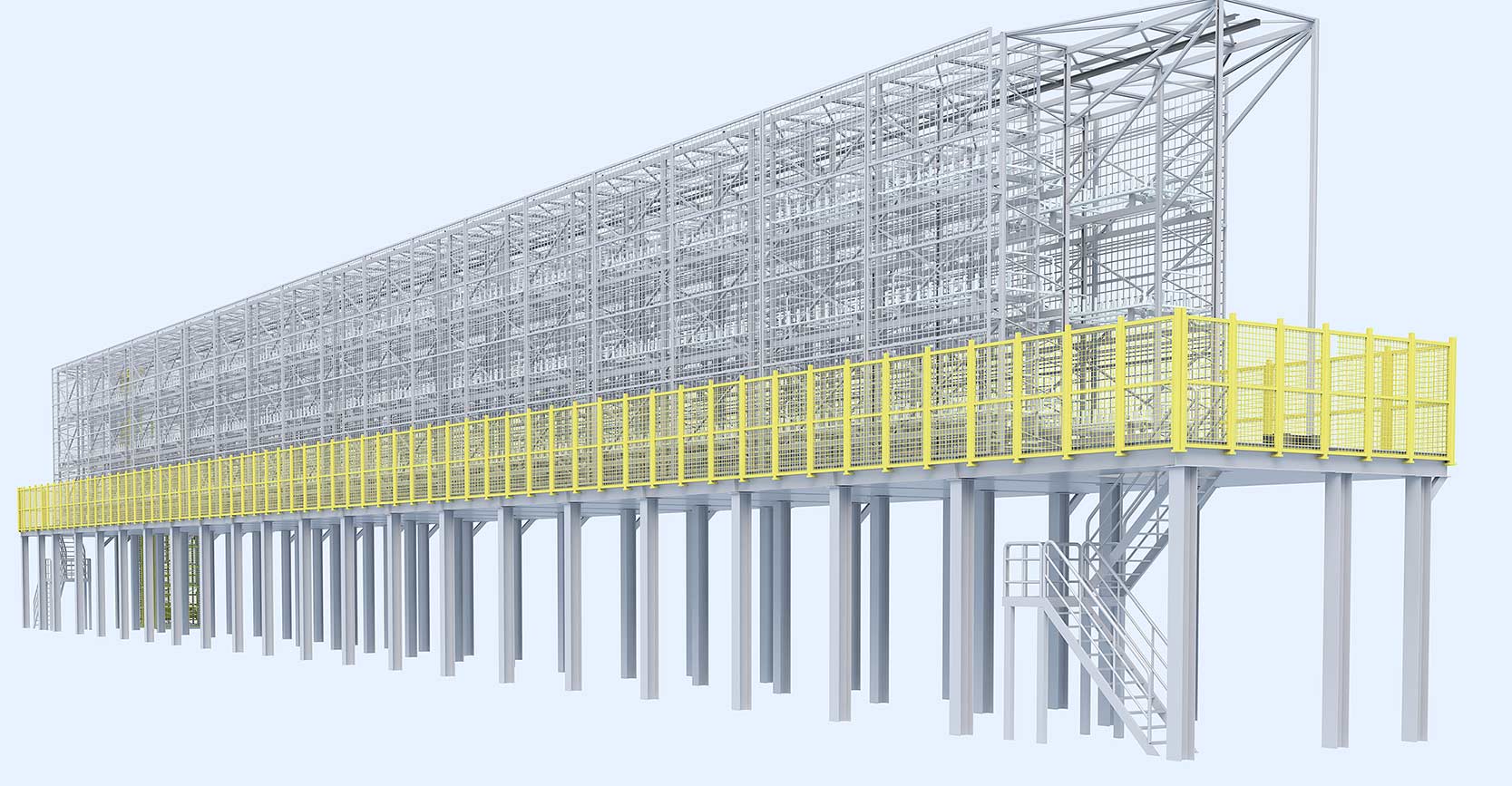
Customized high-rise storage racks are the basic carrier of AS/RS. Compared with ordinary warehouse shelves, they support higher vertical space utilization and standardized cargo placement, laying a foundation for high-density automatic storage.
2.2 Automatic Handling Equipment
It includes stacker cranes, shuttle robots, and conveyor lines. Stacker cranes are responsible for vertical and horizontal access of goods in high-rise racks; shuttle robots adapt to high-throughput rapid storage and retrieval; conveyor lines complete the automatic connection of goods inbound and outbound, realizing unmanned material handling.
2.3 Intelligent Software System
As the brain of the AS/RS system, the software part includes three core modules: WMS (Warehouse Management System), WCS (Warehouse Control System), and equipment identification system. WMS is responsible for overall inventory scheduling and order management; WCS controls the precise operation of mechanical equipment to avoid collisions and optimize operation routes; barcode and RFID identification devices realize real-time cargo information collection and traceability.
3. How Does an AS/RS System Work? Complete Working Principle
The whole working process of the automated storage and retrieval system is automatic and closed-loop, which can be divided into four core links, with high efficiency and zero manual error interference:
3.1 Inbound Storage Process
After the goods arrive at the warehouse, the system automatically identifies the cargo specification, weight and SKU information through scanning equipment. The WMS system intelligently allocates the optimal storage location according to cargo attributes and inventory rules, and the conveyor line transports the goods to the designated position. Finally, the stacker crane or shuttle robot automatically completes the storage operation and synchronizes the inventory data in real time.
3.2 Intelligent Inventory Management
The AS/RS system automatically conducts regular inventory checks without manual warehouse inspection. The system compares real-time cargo data with system data, automatically marks abnormal inventory, and ensures 100% inventory accuracy, effectively solving the problems of manual inventory omission and data lag.
3.3 Outbound Retrieval Process
After receiving the customer order, the WMS system generates a retrieval task, and the WCS system drives the automation equipment to accurately find the target goods. After automatic picking and sorting, the goods are transported to the outbound platform through the conveyor line to complete the order delivery, which greatly shortens the order fulfillment cycle.
3.4 Data Synchronization and Update
After each storage and retrieval operation, the system automatically updates inventory data, storage location information and order records, realizing full-process digital traceability of warehouse operations.
4. Main Types of AS/RS Systems & Applicable Scenarios
According to cargo specifications and operation modes, automated storage and retrieval systems are divided into four mainstream types, matching different industrial and commercial scenarios:
-
Unit Load AS/RS: Suitable for pallet-based heavy cargo storage, widely used in large manufacturing warehouses and bulk material storage scenarios, with the core advantage of high load-bearing and high-density storage.
-
Mini Load AS/RS: Oriented to small parts, material boxes and carton goods, suitable for electronic parts, auto parts and small batch order picking scenarios, featuring fast access speed and high picking accuracy.
-
Shuttle-Based AS/RS: Adopts multi-shuttle cooperative operation, with ultra-high inbound and outbound throughput, suitable for e-commerce warehouses and distribution centers with frequent order changes and large order volume.
-
Vertical Lift Module AS/RS: Optimized for warehouses with limited floor space, making full use of vertical space, suitable for small and medium-sized enterprises and special storage scenarios.
5. Key Benefits of Implementing AS/RS for Warehouse
More and more enterprises choose to deploy automated storage and retrieval systems, mainly because it can bring tangible cost reduction and efficiency improvement benefits for warehouse operations:
5.1 Maximize Warehouse Space Utilization
AS/RS high-rise rack design breaks the height limit of manual warehouses, and the narrow aisle operation mode saves a lot of aisle space. Compared with traditional manual warehouses, it can increase storage density by 2-4 times, effectively saving warehouse rental and construction costs.
5.2 Greatly Reduce Labor Costs and Operational Errors
The full-process automatic operation replaces manual picking, storage and inventory work, reducing the demand for on-site warehouse operators. At the same time, machine operation avoids human errors such as wrong picking, missing picking and wrong inventory counting, reducing enterprise loss caused by manual mistakes.
5.3 Realize 24/7 Uninterrupted Operation
Different from manual work with time limits, the AS/RS system can operate stably all day long, meeting the peak order demand of festivals and seasons, improving the overall operational efficiency of the warehouse and shortening the order delivery cycle.
5.4 Achieve Accurate and Traceable Inventory Management
All cargo operation data is automatically recorded by the system, realizing full-process traceability of goods from inbound, storage, retrieval to outbound. Real-time inventory data synchronization helps enterprises accurately grasp inventory status, avoid overstock and out-of-stock problems, and optimize capital turnover.
5.5 Strong Scalability to Adapt to Business Growth
The modular design of the automated storage and retrieval system supports subsequent equipment expansion and function upgrading. Enterprises can adjust the system scale according to business growth, avoiding the waste of fixed assets caused by repeated warehouse transformation.
6. Considerations Before Deploying an AS/RS System
While AS/RS brings huge efficiency advantages, enterprises need to combine their own business conditions for rational deployment. First, the initial investment of the system includes hardware equipment, software customization and installation and commissioning costs, suitable for enterprises with long-term operation and large storage volume. Second, the system needs regular professional maintenance to ensure stable operation. In addition, targeted scheme design is required according to warehouse area, floor height, cargo type and order characteristics to avoid mismatching between scheme and actual scenarios.

FAQ About Automated Storage and Retrieval System (AS/RS)
Q1: What is an AS/RS system used for?
A: An Automated Storage and Retrieval System (AS/RS) is mainly used for automatic storage, retrieval, inventory management and
order fulfillment of goods in warehouses, manufacturing plants and logistics distribution centers. It is committed to solving the pain
points of low efficiency,low space utilization and high error rate of manual warehouse operation.
Q2: Is AS/RS suitable for small warehouses?
A: Yes. Customized mini-load and vertical lift AS/RS solutions are available for small and medium-sized warehouses. It can help
small warehouses save space, reduce labor dependence and realize standardized warehouse management without large-scale
site transformation.
Q4: What industries are AS/RS most suitable for?
A: It is widely applicable to automotive manufacturing, electronic industry, cold chain logistics, pharmaceutical storage, e-commerce
fulfillment, food processing and other industries with high requirements for storage accuracy, efficiency and safety.
As the mainstream trend of modern warehouse automation, the Automated Storage and Retrieval System (AS/RS) effectively solves the various pain points of traditional warehouse operation through high-density storage, full-process automation and digital intelligent management. It not only reduces long-term operational costs for enterprises, but also improves warehouse operational efficiency and management standardization, helping enterprises build core competitive advantages in the increasingly fierce logistics and manufacturing market.